
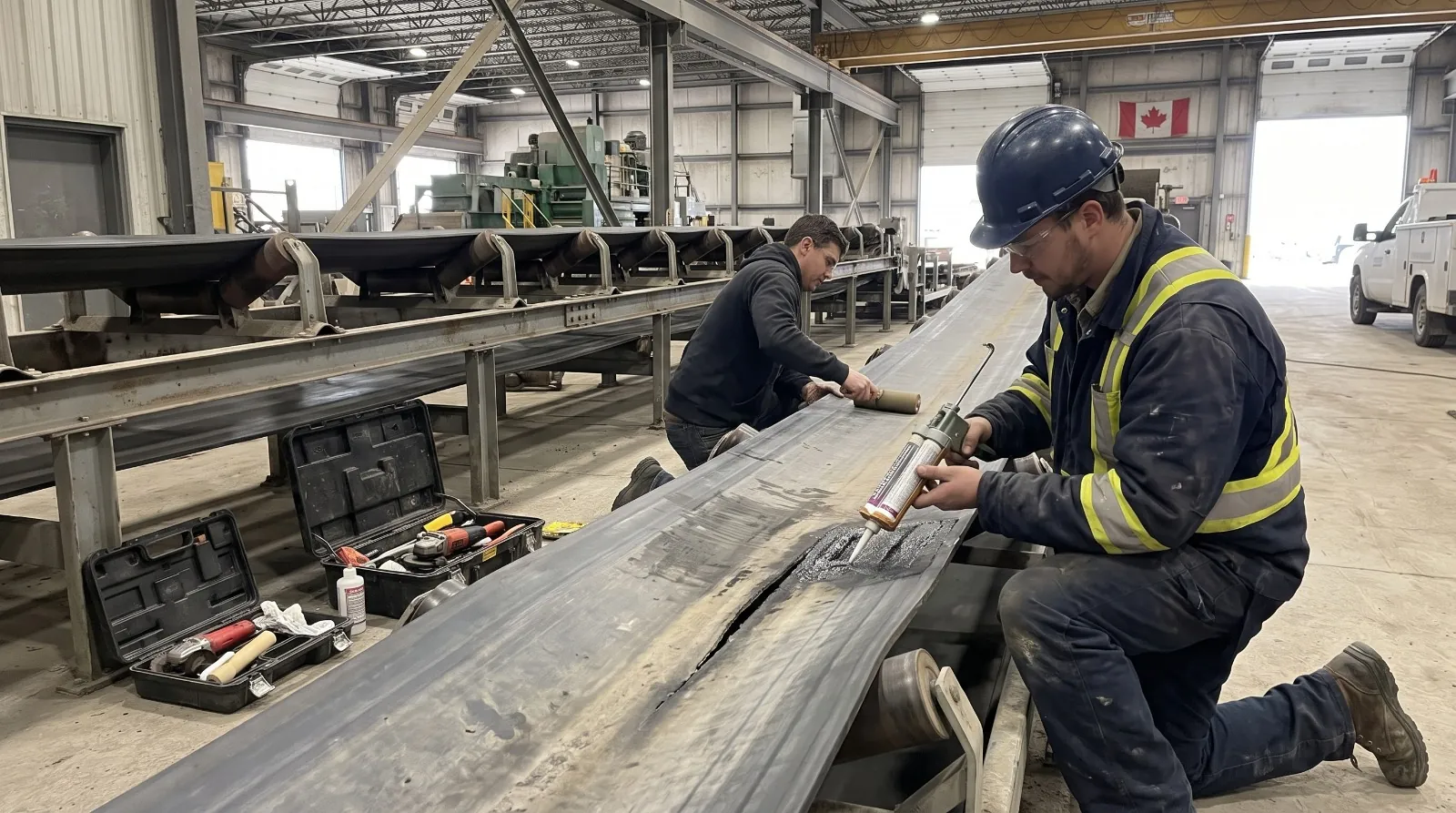
Rapid-Cure Rubber Conveyor Belt Repair: Back in Production Fast.
Skip long vulcanization bake times and destructive metal fasteners. Our rapid-cure chemical bonding compounds let your line return to service far sooner.
Every minute of a stopped conveyor is lost revenue.
When a rip, gouge or splice failure halts your conveyor, our field service technicians deploy high-performance, rapid-cure elastomeric bonding polymers engineered to repair heavy-duty rubber and PVC belts on site. The bond cures rapidly, putting your system back in service without waiting for heating presses or scheduling overnight shutdowns.
Core value: dramatically shorter repair downtime compared with hot vulcanization or cumbersome lace installations.

Rapid-cure bonding vs. outdated methods.
| Repair method | Hot vulcanization | Mechanical metal fasteners | Our rapid chemical rubber bonding |
|---|---|---|---|
| Downtime required | Long: heating, press setup, cooling | Moderate: lacing and fitting | Rapid cure and quick restart |
| Equipment needed | Bulky, heavy heating presses and heavy power draw | Heavy lacing tools and drills | Compact, portable on-site chemical injection and prep |
| Belt integrity | High strength, but heat degrades adjacent rubber | Holes punctured through the carcass create weak zones | Preserves the structural carcass; seamless elastic bond |
| Scraper / skirt compatibility | Smooth profile | Fasteners snag, damage scrapers and catch material | Completely flush finish; safe for scrapers and idlers |
| Leakage / sifting | Sealed | Fine powder and bulk solids sift through fastener gaps | Seamless, fully sealed repair prevents material loss |
Belt problems our field technicians repair on site.
Longitudinal belt rips & tears
Sealing continuous punctures and slice damage caused by lodged debris or metal tramp.
Top & bottom cover gouges
Filling deep gouges and holes down to the fabric carcass before moisture rots the inner plies.
Splice seam failures & edge wear
Re-sealing peeling cold or hot splices and rebuilding frayed, delaminated belt edges.
Conveyor down?
Tell us about the belt and the damage and we’ll respond by email.